Latest essay Psychology
On Shame
Shame can organise a life around anticipated rejection. Habitual concealment then begins to feel like personality, making it difficult to recognise what is being protected.
Read the essayWriting by Roman Sutherland
Essays on belief, identity and how we interpret experience.
Shame can organise a life around anticipated rejection. Habitual concealment then begins to feel like personality, making it difficult to recognise what is being protected.
Read the essayThe archive
25 essays · Newest first
25 essays
Shame can organise a life around anticipated rejection. Habitual concealment then begins to feel like personality, making it difficult to recognise what is being protected.
An examination of dissociation through changes in the connections between memory, emotion and identity, considering the possible protective role of separation and its costs over time.
Bezmenov’s account of ideological subversion provides a starting point for examining how careless language and failing trust can weaken political life from within.
Dreams prompt a question about waking experience: how could we establish that the reality we inhabit is the final standpoint from which to judge it?
A fictional dialogue with Socrates examines the assumptions beneath ordinary beliefs and asks how we can act responsibly without treating uncertainty as arbitrariness.
A personal reflection on how concern about suffering and injustice can weaken motivation when the problems seem larger than any available response.
The distinction between studying philosophy and living by its questions becomes personal through reflections on conviction, everyday conduct and social isolation.
A speculative account of what happens to identity and accountability when connected digital records make a person’s past continuously available for judgement.
In group conflict, shared emotion can carry interpretations and moral certainty before the underlying claims have been examined. What happens to empathy in the process?
A dialogue considers the frustration of a species capable of reflection repeatedly causing harm, and whether the technologies it builds will change that pattern.
Two different MBTI results prompted an examination of typology, leading toward a proposed model of interacting tendencies, stress responses and recurring patterns of behaviour.
A delayed reply becomes a practical exercise in following a thought through interpretation and emotion before reviewing the assumptions behind its conclusion.
Giving a pattern a name can change what we expect and notice, allowing a description of past behaviour to begin directing future responses.
Revisiting old Facebook posts prompts a reflection on development experienced as repeated replacement, followed by efforts to reconnect earlier versions of the self.
Examining an argument’s premises can expose where its conclusion outruns its reasons, while also threatening the personal meaning that makes it worth defending.
Self-observation can unsettle the habits and explanations a person relies on to function. This complicates the assumption that greater clarity will always help.
A walk past trees bent by wind prompts questions about normality, the influence of environment on behaviour, and the mind’s demand for explanation.
The free will defence of evil is questioned through an argument about how biology, trauma and social conditions constrain the choices for which people are held responsible.
A proposed account of narcissism focuses on resistance to shame and accountability, examining how protection from uncomfortable feedback can restrict reflection and damage relationships.
The dragonfly’s development supplies a metaphor for unfinished human capacities, questioning whether apparent confusion or scattered interests always mean that growth has stalled.
Preferences often become apparent through experience, raising a question about how much of self-discovery involves choosing who to become and how much involves noticing.
Protective stories about suffering and failure are followed into a proposed account of narcissism, where preserving identity comes to depend on resisting revision.
A naturalistic argument follows physical processes through chemistry, life and consciousness, treating humanity as part of the world it tries to explain.
Questions about the universe’s origin become an argument about the limits of causal reasoning when applied beyond the conditions in which we ordinarily use it.
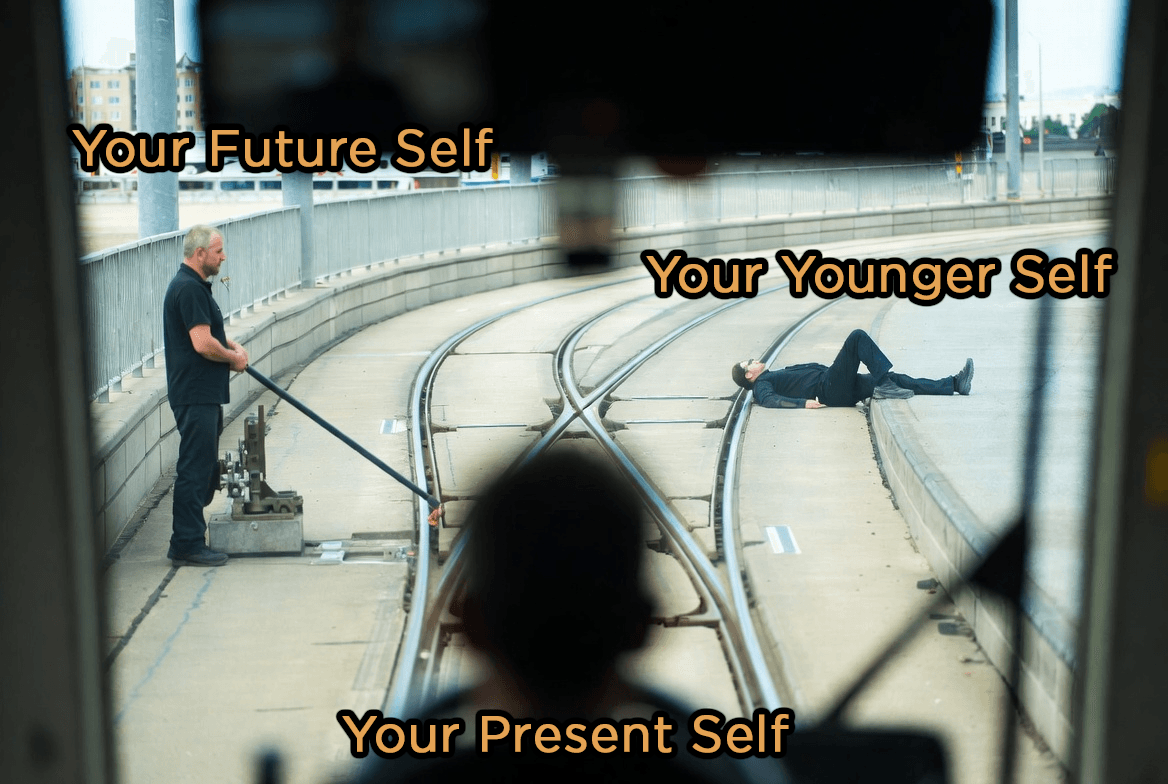
The trolley problem becomes a metaphor for choices between past attachments, present stability and possible futures, with attention to what the metaphor leaves out.
Short statements, with room to examine what follows from them.